
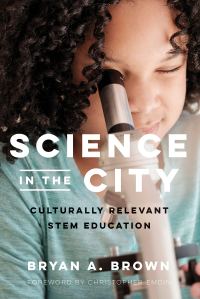
 Science in the City: Culturally Relevant STEM Education by Bryan A. Brown of Stanford University is a true gift to the science education community. I’ve been using a YouTube video of Dr. Brown discussing science, language and identity for several years in workshops and with my pre-service science teachers (see embedded video below). Dr. Brown has taken the ideas in the short video and built them into an engaging, readable and important book.
Science in the City is an easy read largely due to Dr. Brown’s writing style and his use of story to couch the ideas that he’s presenting to us- he’s also modeling for us what he wants us to do with students! The stories are everyday events that illustrate language, identity, and race. One of my favorites is from early in the book when Dr. Brown reminds us of a post-game interview that Florida State quarterback Jameis Winston gave on TV in 2014 following a victory in the national championship game. After the interview Mr. Winston’s interview was met on social media with a barrage of criticism including a tweet saying, “Am I listening to English?” This criticism was countered by tweets from Lebron James and Reggie Bush praising Mr. Winston’s leadership, interview skill, and talk. Dr. Brown puts this in front of us to make the point that schools tend to value “academic English” and that many folks working in educational systems have a bias for (and against) certain types of talk. We are often missing out on the brilliance of students of color based on these biases.
If you have done any work on student discourse in science this book will resonate with you and likely push you to think deeper about how to interrogate educational systems for more culturally relevant language practices in science classrooms.
Here is a quote from the book that illustrates what Science in the City is all about:
If there is a single message that serves as the foundation for this book it is the idea that there is no cultural distance between students of color and a successful science education.
The final chapter of the book does a clear and concise job of presenting a small but powerful set of instructional practices to implement in science classrooms:
- Disaggregate Instruction
- Generative Formative Assessment
- Culturally Based Cognitive Apprenticeship Instruction
- Technology as a Cultural Mediator
I highly recommend adding Science in the City to your set of science education resources. I’d also love to hear from anyone else who has been digging into this book.


 Science for All
Leave a reply to DavidSci Cancel reply